


 After a day
Linen Relaxed
$84
Away from the body.
160 g/m² · Plain weave
Airflow5 of 5
Creasing5 of 5
Woven summer shirts/Linen · Linen-cotton · Fine cotton
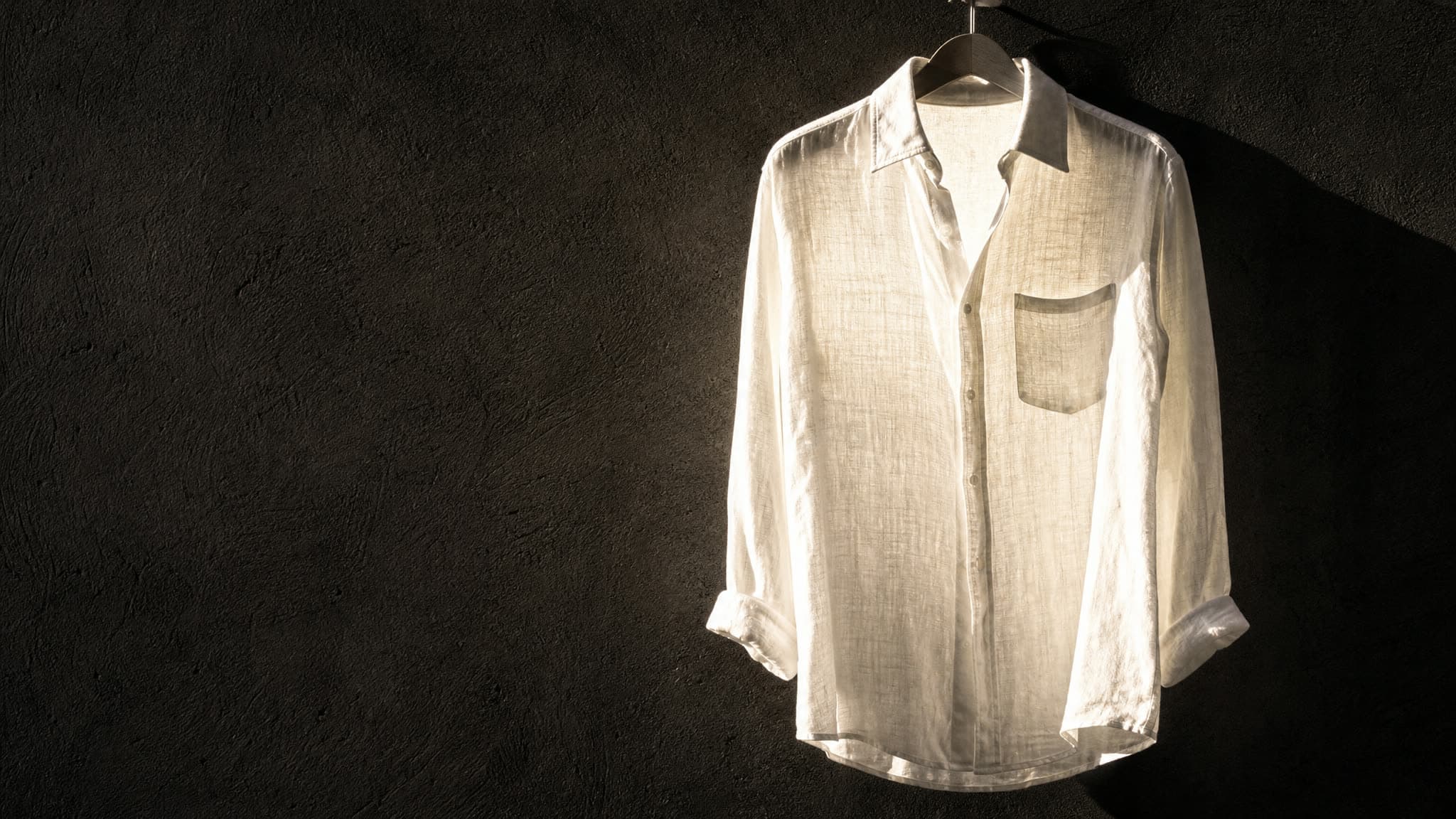
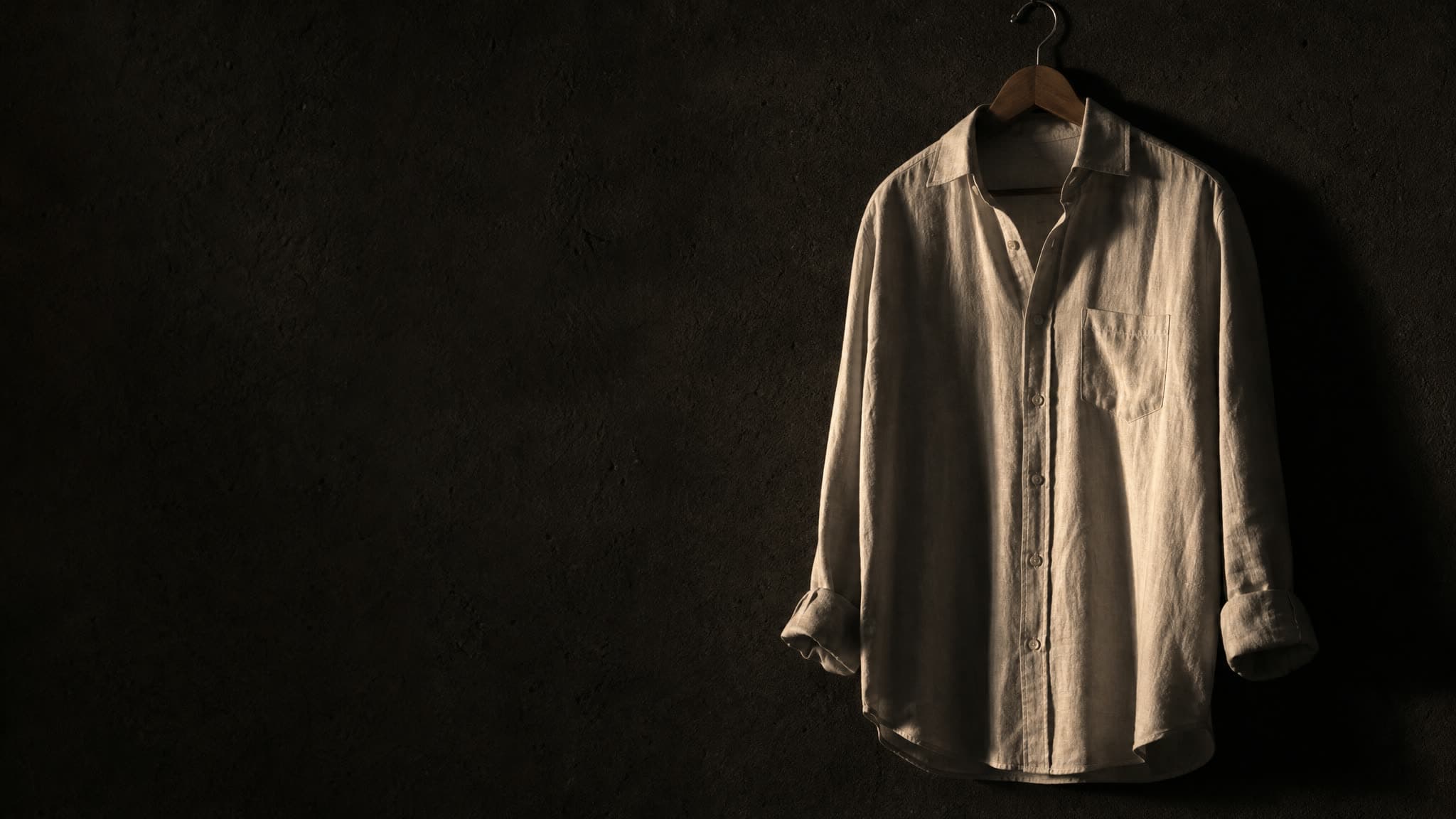
At noon you can see how much light gets through the cloth. At dusk you can see how it falls. We photograph both, and we do not press it in between.
Change the light. The whole shop changes with it.
01 / Why airflow
Two things decide whether you are comfortable at three in the afternoon: how much air gets through the cloth, and whether the cloth is touching you when it does. Weight and weave settle the first. Cut and structure settle the second. Everything in this shop is described in those terms.
How we grade
Airflow
Driven by weight and by how open the structure is. A 130 g/m² plain-weave linen sits at five. A 175 g/m² oxford sits at two.
Creasing
Driven by fibre. Flax folds and stays folded; cotton recovers; a puckered structure never looked flat to begin with.
03 / After a day
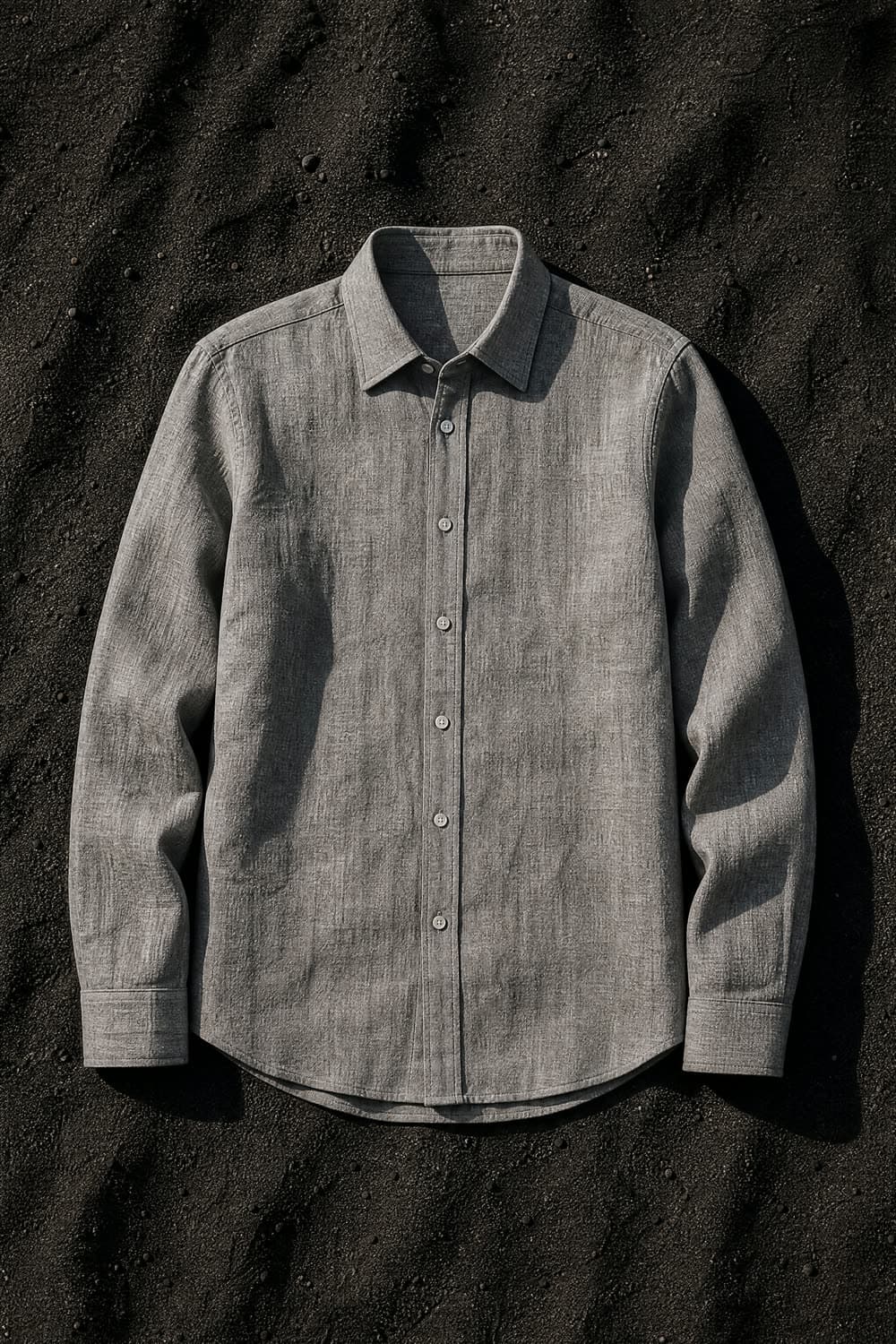
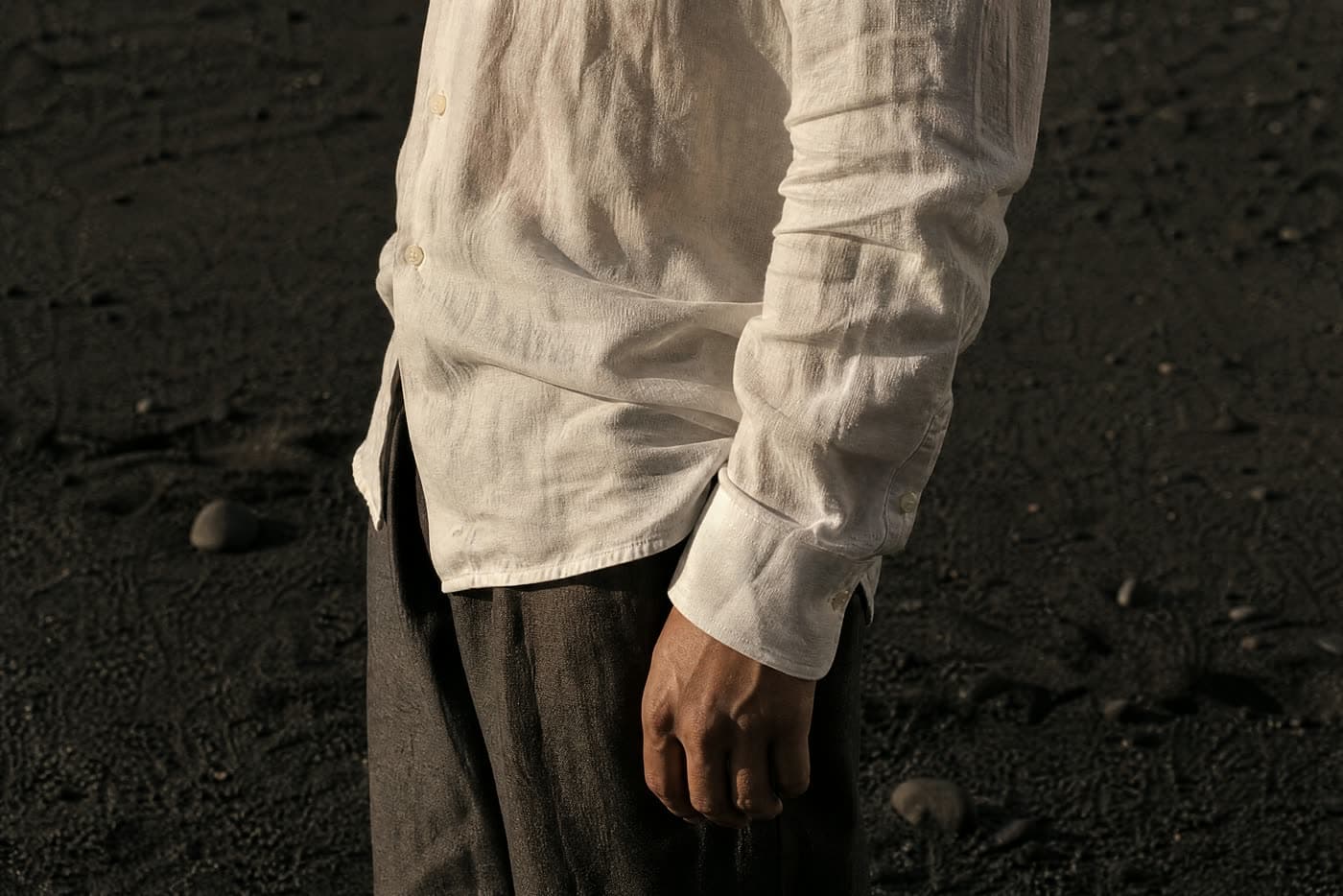
Linen creases. It creases more in humidity and less after the third wash. The industry answer is to press the shirt, shoot it in ninety seconds and let you find out at a wedding.
On every shirt here that contains flax, the first photograph you see is the one taken at the end of a day of wear. The pressed frame is still there, second, if you want it.
Read the fabric notesEight cloths
 Pure linen 130130 g/m²Light floods straight through. The most open thing we weave.
 Pure linen 200200 g/m²Same light, same distance. Almost nothing gets past it.
 Cotton voile85 g/m²Cotton spun fine enough to behave like flax under a lamp.
 Linen-cotton 55/45150 g/m²Irregular flax against round cotton, in the same cloth.
 Slub blend160 g/m²Yarn that thickens and thins on purpose, so folds land in the texture.
 Poplin 120110 g/m²Flat, closed, regular. Drape instead of body.
 Seersucker130 g/m²Woven at two tensions so only the ridges touch you.
 Oxford175 g/m²Paired threads in a basket. The one with enough body for a jacket.
Six lines
06 / Airflow Finder
Not your style, not your colour. Three questions about where you are, what would stop you wearing a shirt again, and what the day is. If you say you cannot stand creasing, the entire pure linen line disappears and the results tell you so.
Open the finderSix of forty-two
After a day$84
Away from the body.
160 g/m² · Plain weave
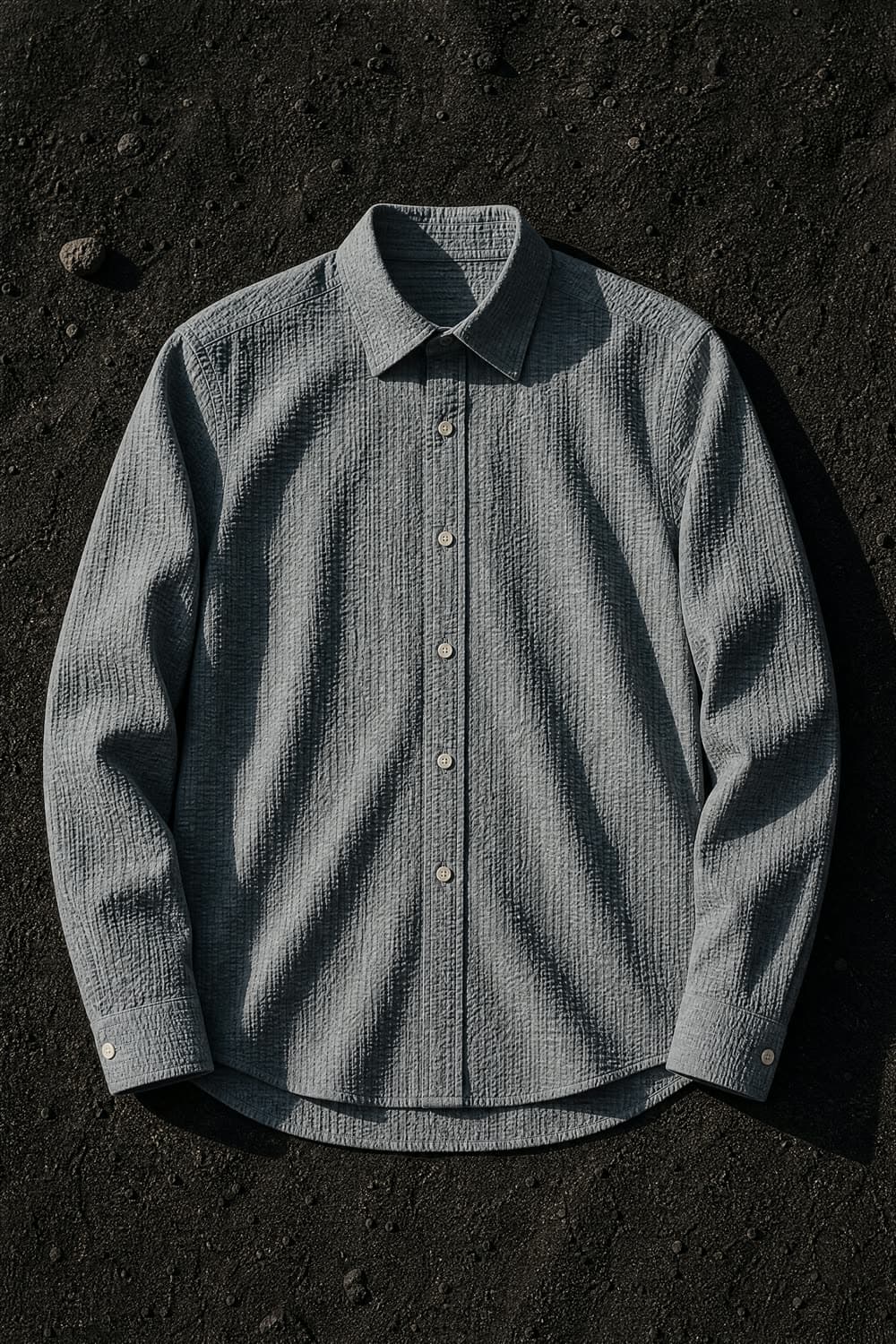
$92
The structure holds it off you.
130 g/m² · Seersucker
 After a day
$78
The holiday default.
140 g/m² · Plain weave
 After a day
$78
Dark without going opaque.
155 g/m² · Chambray
 After a day
$128
The outdoor ceremony.
140 g/m² · Plain weave
 After a day
$118
Opaque, wears alone.
200 g/m² · Plain weave
Sets
 After a day
$188
The two hottest weeks.
3 shirts
 After a day
$178
Summer commuting.
3 shirts
 After a day
$138
Three cloths, one order.
3 shirts
Plainly
Every shirt states two countries: where the cloth was woven and where the garment was cut and sewn. They are often different, and we print both rather than the more flattering one.
We make no easy-care claim on any product. Linen creases; the blends crease less; the twill and the seersucker barely crease at all. The rating on each shirt is the whole of what we will say about it.
Airflow and creasing are our own relative ratings across this catalogue, not laboratory measurements.
These are shirts. They are not antibacterial, they do not protect you from ultraviolet light, and we will not describe a cotton field as sustainable in order to sell you one.